Botteghiamo?

Ci scusiamo. Al momento non è disponibile alcuna traduzione italiana per questa pagina.

Botteghiamo?

August 1, 2012
Sorrento, Campania

Unfortunately we all know that the speed of modern life can make it difficult to appreciate and give proper due to the old traditions and know-how of cabinet makers, inlayers, embroiderers, upholsterers, restorers, ceramicists, and shoemakers, among others. Artisans, their traditional workshops, and thus a small piece of history are unfortunately slowly disappearing throughout Italy.
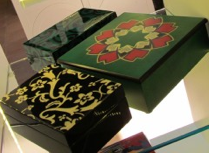
Well, rather than lament the state of affairs, our new friends at Botteghiamo (an untranslatable, made-up word; roughly meaning, “Let’s artisan workshop/ing”) have decided to do something about it. Their admirable goal is to foster an until-now non-existent link between the traditional artisans and the global community through the web, social technologies, and the increased awareness of this priceless and irreplaceable legacy. Their first project?

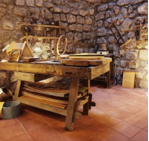
Together with the Unione Artigiani Intarsio Sorrentino (Sorrento’s inlayers association), Botteghiamo-Intarsio is a modern hands-on journey into the workshops, old traditions, and know-how of these incredible wood-working artisans.

Beginning in June 2012, Botteghiamo and the intarsiatori of Sorrento have set up shop, showroom, and workstations inside the ancient defense walls of the town. Work from each and every one of Sorrento’s intarsiatori is on display, and four artisans at any given time are on location all day creating their beautiful masterpieces right before the eyes of any and all friends (that’s us!) who are invited to stop by to witness firsthand the breathtaking art and technique of these maestri.

Botteghiamo has also done events with the artisans of Rome, and will be expanding there as well as in other cities throughout Italy that are centri di eccellenza artigianale (centers of artisanal excellence). Keep an eye out for copies of their city maps, (printed from a hand-painted original, obviously!), available at tourist information booths in Rome and Sorrento.

ItalianNotebook fully endorses Botteghiamo’s mission, and we look forward to more collaborative work with their team, proud to be an international mouthpiece and strong web presence by their side. Auguri!

Will Our Italian Heritage Become Extinct by the End of This Century?

Ci scusiamo. Al momento non è disponibile alcuna traduzione italiana per questa pagina.

I have devoted a great deal of my life working to preserve our Italian heritage in the United States. Many of you have spent time and money doing the same but, in doing so, have we wasted our time, money, and energy? The odds are against us because we are not doing the things we should. How does an ethnic group insure its survival?

Italy today is not the same country your grandparents left, and it is true that many Italian-Americans are now highly acculturated and assimilated members of American society. We also agree that the language has been lost, and almost everything of Italy and things Italian. If there was the will, Italian-Americans could learn about Italy and her heritage. If we are able to get across to Italian-Americans that our Italian heritage is a treasure, we may have more success. We need to point out that Italian personal and family values and our way of interacting with relatives and friends is very enriching. By raising the consciousness of our intellectual heritage, they will come to value what Italy has contributed to the world!

I have always been amazed by the effect that Italy has had on the Italian-American tourist. It is a key to culture and identity, especially when contact is made with family and place. Italy is playing a formidable role in the world economy, politics, science, and arts in the present day.

I agree that our future depends upon social cohesion. We need to encourage more Italian-Americans, especially young people, to join Italian-American organizations. As members, they will have interaction with other individuals with shared values and personal identity. We must welcome the spouses who are not of Italian descent and encourage them to share both heritages with their children. Our Italian-American organizations must provide educational material for children of mixed antecedents. There must also be programs and events in our organizations for various socio-economic class positions.

Compete assimilation and the extinction of our Italian ethnicity has not yet taken place. We are in the twilight of ethnicity, and that is why it is so important to act today. We have some of the answers when we see the persistence of ethnicity in the United States. We notice a lingering attachment to Italy by third- and fourth-generation Italian-Americans. Why? One good reason is an authentic and deep understanding of things Italian, past and present.

We must raise the consciousness of Italian-Americans in light of being more educated. The affairs of a very modern Italy have appeal because Italy is contributing so much to modern life. Italian radio and television are now available in the United States, There are so many opportunities to keep in touch with Italy and with our families there.

— Prof./Cav. Philip J. DiNovo


Dolce far niente

Ci scusiamo. Al momento non è disponibile alcuna traduzione italiana per questa pagina.

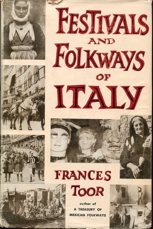
Recently I was paging through one of my favorite books Festivals and Folkways of Italy by Frances Toor. Toor (1890-1956) was an ethnologist who traveled through Italy shortly after World War II. She spent eight months in Italy experiencing and writing about the festivals, crafts, foods and trad

Dolce far Niente

itions of the “peasant” Italians. She believed that the “richest” traditions and folk arts belonged to the poor.
In her book, Toor describes Neapolitans as intelligent, generous and capable of great friendship. She then notes how they are good workers but do not like working under bosses. As a result they try to eke out a living by selling something or working in their crowded bassi (one room apartments). Toor states that she saw little of the dolce far niente (sweet laziness) which Neapolitans are famous for. She offered the following story as an example of dolce far niente.
A fisherman asleep on the shore in the shade of his rowboat was awakened by a friend who said to him,”Wake up Giovanni, a big passenger ship with many foreigners has just come in!”
“What’s that got to do with me?” asked Giovanni, stretching lazily.
“Why, you ought to go out there with your boat and bring in passengers. You can make lots of money that way.”
“Then what?” replied Giovanni.
“Why, in time you can buy another boat and your son can help you.”
“Then what?” Giovanni queried again.
“Then you will be rich and you can rest!”
“But here I am resting already,” said Giovanni, as he turned over and went to sleep again.
Copies of Frances Toor’s book Festivals and Folkways of Italy (1953) can be purchased on the web for less than $5! It is a must read of Italian folklore.
Submitted by Paul Torna


I Pastori (The Shepherds)

Gabriele D’Annunzio

Settembre, andiamo. È tempo di migrare.
Ora in terra d’Abruzzi i miei pastori
lascian gli stazzi e vanno verso il mare:
scendono all’Adriatico selvaggio
che verde è come i pascoli dei monti. Han bevuto profondamente ai fonti
alpestri, che sapor d’acqua natia
rimanga nei cuori esuli a conforto,
che lungo illuda la lor sete in via.
Rinnovato han verga d’avellano.E vanno pel tratturo antico al piano,
quasi per un erbal fiume silente,
su le vestigia degli antichi padri.
O voce di colui che primamente
conosce il tremolar della marina!Ora lungh’esso il litoral camina
la greggia. Senza mutamento è l’aria.
Il sole imbionda si la viva lana
che quasi dalla sabbia non divaria.
Isciacquio, calpestio, dolci rumori.Ah perchè non son io co’ miei pastori?
September, let us go. It’s time to migrate.
Now in the land of Abruzzi my shepherds
leave the stables and go towards the sea:
they go down to the wild Adriatic
which is green as their mountain pastures. They drank deeply at the mountain
springs, so that a taste of native water
stays in their displaced hearts to comfort them,
so that long it may soothe their thirst along the way.
They have replaced their chestnut shepherd’s staff.And they go along the ancient track to the plain,
as if following a grassy silent river,
on the footsteps of their ancient fathers.
O the voice of he who first
recognizes the trembling of the sea waters!Now following the coast the sheep tread.
Motionless is the air.
The sun so lightens the living wool
that it’s almost indistinguishable from the sand.
Splashing, trampling, sweet noises.Alas why am I not with my shepherds?

Book: A Christmas Adventure in Little Italy

Ci scusiamo. Al momento non è disponibile alcuna traduzione italiana per questa pagina.

A Christmas Adventure in Little Italy

It’s the day before Christmas, and Jimmy and his best friend—his dog, Blackie—are visiting Nonna, Jimmy’s grandma, in her neighborhood called Little Italy. Jimmy loves to visit with Nonna, especially when he can help her make biscotti. After they finish their baking, Jimmy, Nonna, and Blackie set out together on the wintry day to take packages of the freshly baked biscotti to St. Michael the Archangel Church, where the cookies will be given to poor families on Christmas Eve. But as they leave the church, a bus making a sudden stop startles Blackie, and the little dog runs off through the neighborhood. All too soon, Jimmy realizes that Blackie is lost. Even though Jimmy and Nonna search everywhere, the quickly falling snow covers up Blackie’s paw prints, making it impossible to follow him. Will Jimmy’s Christmas be a sad one without his best friend?

A Christmas Adventure in Little Italy is a heartwarming tale of a boy and his dog, set against the backdrop of a 1950s-era Italian neighborhood. The endearing and evocative images and child-friendly narrator’s voice will enchant young readers (and listeners), transporting them to a time gone by—a time of simple pleasures and special relationships. The inclusion of Nonna’s biscotti recipe at the end of the book—a real taste of Little Italy—is an added treat that children and adults alike will love. A portion of the proceeds from the sale of this book will be donated to the Kathleen Muth Reading Center at Chapman University. For more information, please visit www.chapman.edu.

To buy the book from the author, go to <http://www.achristmasadventure.com/>. The book is also available through amazon.com or Barnes & Noble.


Greater Rockford Italian American’s Hall Of Fame 2012

Ci scusiamo. Al momento non è disponibile alcuna traduzione italiana per questa pagina.

October 6, 2012, the Amici Italiani Youth & Adult Dance Troupes of Rockford, Illinois, had the honor of being inducted into the Greater Rockford Italian American’s Hall Of Fame! Congratulations!!

Shirley Martignoni Fedeli, Rosie Sheridan, Bea Giammarese Ricotta, Carla Mullen, and Pauline Ursa all of Amici Italiani, with Dr. Alberto L. Pumilia who was also honored
Members of the adult and children’s groups of at the ceremony

Italians in San Juan Capistrano, California

Ci scusiamo. Al momento non è disponibile alcuna traduzione italiana per questa pagina.

As the Ambassador of San Juan Capistrano’s Sister City Program, IFAFA Member Vicky Carabini had the idea of creating a festival that celebrates the art and culture of Italy, in the city of San Juan Capistrano, CA. Out of that idea was born Ferragosto in San Juan Capistrano, a non-profit, volunteer-staffed, family-friendly free event. Major event partners are the Boys and Girls Club of Capistrano Valley, J. Serra Catholic High School, and the San Juan Capistrano Chamber of Commerce. The event, focusing on Italian culture, crafts, and art, will next be offered in 2013. It will include Italian Street Painting in which the street becomes the canvas and pastels, the paint. One of the accomplishments of the organization was to raise funds to have the award-winning audio tour on the website for the Historic Mission San Juan Capistrano translated into Italian. You can listen to it at:

http://missionsjc.com/tours/audio.php

Sister City – Capestrano, Italy

San Juan Capistrano celebrates its Italian connection with its Sister City, Capestrano, located in the Abruzzo region of Italy. The two cities became officially ‘twinned’ on June 13, 2000. Since then, the two cities have had cultural and educational exchanges. Some of the activities have included vendors from Capestrano, Italy, participating in the Italian Celebration of the Swallow’s Return at the historic Mission San Juan Capistrano in March 2009, and, in October 2010, there was an educational exchange between the students at the Mission Parish School and the students in Capestrano. The City of San Juan Capistrano Sister City Program also coordinates a St. Joseph Day food drive for the local food bank, Fr. Serra’s Pantry; enters an Italian entry in the Annual Swallow’s Day Parade; and hosts Italian language classes twice a week at Vitos Restaurant located in the historic center of the city and monthly Italian movies at the newly renovated Regency Theater next to the train depot.


Spaghetti with Black Truffles

Ci scusiamo. Al momento non è disponibile alcuna traduzione italiana per questa pagina.

2 fresh black truffles 2 cloves garlic, minced
½ cup extra virgin olive oil Salt
1 lb. spaghetti (dry) grated Pecorino cheese

Brush truffles very gently to clean them. Using a mandoline or truffle grater, slice truffles as thinly as possible into a bowl, pour in the olive oil, and cover with plastic wrap. Allow mixture to sit at room temperature for a few hours to infuse the truffle flavor into the olive oil. (If you cannot find fresh truffles, substitute ½ c truffle oil for this step, perhaps adding some porcini or other flavorful mushroom shavings, but it won’t be quite the same.)

Cook the spaghetti according to package instructions. Remove 2 tablespoons of the truffle olive oil (with no truffles) and heat it in a skillet with the garlic, gently cooking the garlic until softened. Do not burn the garlic. Remove from the heat and add the truffles with the rest of the olive oil. (Truffles should never be “cooked,” just gently warmed so that you don’t destroy their delicate flavor.)

When the spaghetti is cooked, drain and add to the truffle and olive oil along with a splash of the cooking water, and gently reheat over very low heat.  Serve with grated pecorino at the table.

Serves 4


Truffle Crazy

Ci scusiamo. Al momento non è disponibile alcuna traduzione italiana per questa pagina.

Truffle Crazy
By Helen Donegan
http://www.italywithus.com/index.php

Truffles are the things, I think, that illustrate more than most how much Italians love their food. I had never really heard of them before I came to live in Italy. Then I only ate them when some one else was paying.
One day ten years ago my husband came home with enough “truffle” to do two plates of pasta (a very tiny piece). He was all pleased with himself and had paid $40 – I nearly throttled him! I couldn’t believe someone would pay so much for a plate of pasta! Now I know better – people go crazy for them! So I would just like to take you through a fact-finding tour and let you know of the various truffles festivals that are held in Italy during the Autumn/Winter.

The first thing is of course to explain what truffles are; I can’t be the only person who didn’t know! Basically truffles are glorified mushrooms (I am sorry, I am sorry!) that are found in certain areas in Italy (and some other countries). There are many different types, but we can divide them into white & black and then again by season.

The big divide between white and black truffles causes endless discussion here – the white truffle mainly comes from the North of Italy, especially in the Piemonte region. These are considered superior by about 75% of the experts; some even claim they have aphrodisiacal qualities!

“True truffles” have to come from certain areas and be grown in the right season – the black winter truffle is found mainly in Umbria from mid-November until mid-March. The black truffles are favored by the other 25% of the above-mentioned “experts.” The white truffle is officially found in the Piedmont region of Italy from early October through late December but they can come from other areas of the North of Italy. There are other “inferior” truffles, including the summer truffles.

Attempts to produce truffles commercially have all failed; they will not grow “on demand.” They grow underground, mainly at the roots of oak trees – but also chestnut, hazel, or beech trees at times. Specially trained pigs or dogs sniff them out, and it is this long slow process, which makes them so expensive. The men who collect the truffles are highly expert in their work. They are said to be able to identify the shape of a tree, which will have good truffles under the roots. If the truffle isn’t ready for eating, it will be put back under the soil to be harvested later. Searching for truffles is almost religious in a way. The men and their animals are greatly revered by many. I found the many accounts which demonstrate a little of the “magic” involved in the whole process.

With the scarcity of the truffle and the difficulty in finding it in the first place, the price keeps going up. Of course this leads to shady and sometimes criminal activity. Some restaurants will go to incredible lengths to satisfy their clients. This encourages racketeering, etc. You also have to make sure that the restaurant or shop selling them is reliable. Not everything called a truffle is a truffle; there are many “fake” varieties. Personally I can’t tell the difference and, if the price is right, I don’t care! (I know that is sacrilege to all “foodies”).

There are lots of recipes using truffles. It depends on the quality of the truffle if you cook them or not. Now a complete industry has grown up around truffles, and there are many types of oils and sauces made with them. Purists say that you can’t preserve truffles – putting them in oil is supposed to ruin the truffle and the oil. They say you should eat them fresh, within two weeks of being taken from the ground. Apparently the taste diminishes even within these two weeks, so the fresher the better. However I think, if you like the taste of truffles and have no alternative, you will enjoy the various products with a truffle flavor. (See recipe for Spaghetti with Black Truffles on the next page.)

There are lots of special events held throughout the year where you can taste truffles and enjoy the party-type atmosphere they evoke. If you are going to be in Italy during truffle season, try phoning the hotlines below to learn of local truffle festivals:

Truffle Festival Hotlines
Alba: 0173/362-807 Mondovì: 0174/559-263, 559-256
Asti: 0141/399-482, 399-399 Montechiaro d’Asti: 0141/999-136
Canelli: 0141/823-685, 820-111 Murisengo: 0141/993-041
Moncalvo: 0141/917-505


Italian Needlework Treasures

Ci scusiamo. Al momento non è disponibile alcuna traduzione italiana per questa pagina.

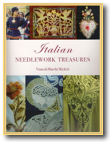
IFAFA Member Vima deMarchi Micheli, who has demonstrated and exhibited her beautiful lace creations at several IFAFA Conferences, has published a book entitled Italian Needlework Treasures. It is a guide for travelers interested in finding needlework in Italy, including embroiderers, lace-makers, collectors, antique dealers, and costume designers. The 146-page book contains over 84 colored photographs and 25 black and white photographs. The cost of the book is:

USA: $45 (including tax) + $5 shipping and handling.

Canada: $45 + $8 shipping and handling.

Europe: €30 + $15 shipping and handling